Tesla Vehicles and Carseats
Tesla Model S, Model 3, Model X, Model Y and Carseats
 Are you looking for a carseat or belt-positioning booster seat to fit in your Tesla? Teslas can be great family cars with the right carseats. As a Child Passenger Safety Technician Instructor who also runs a review and resource site, manufacturers send me carseats to try in my Teslas. I have over 100 carseats in my inventory and can help you with what may or may not work in your Tesla.
One issue all Tesla models have had is narrowness between the seat belt anchors and buckles that are flush with the seat cushion; it’s very difficult for booster riders to buckle up. It’s dangerous to use buckle extenders because they may place the “new” buckle in an unsafe position on the booster rider or not fit precisely into the Tesla buckle. Most importantly, the Tesla owner’s manual (and most booster manuals) prohibit their use.
Note about model year: Tesla vehicles aren’t updated on the traditional model year schedule; a model year for a Tesla runs January 1-December 31. Tesla regularly releases software updates.
Physical updates, called “refreshes,” are often made mid-year but can happen any time. I label the vehicles by model year but only to give a date to them. Some have mid-year back seat refreshes but they are still considered the same “model year.”
Did you know CarSeatSite has a YouTube page? I’m looking for suggestions for videos—if you have questions about a Model 3 or Model X carseat installation, please email me and I’ll try to get something recorded if I have the carseat available (I have quite a collection!). Also, please subscribe to the YouTube page so you can see videos as they’re posted!
Terms used on this page:
Bight: the seat crack
Head Restraint: the vehicle’s device for keeping you from safe from whiplash in a crash
Outboard: outside, next to the door; behind the driver or behind the passenger
Model S
LATCH (Lower Anchors and Tethers for CHildren) Locations
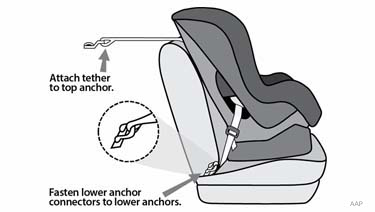
The lower anchors secure the bottom of the carseat to the vehicle while the tether secures the top of a forward-facing carseat (and in some rare cases, a rear-facing carseat).
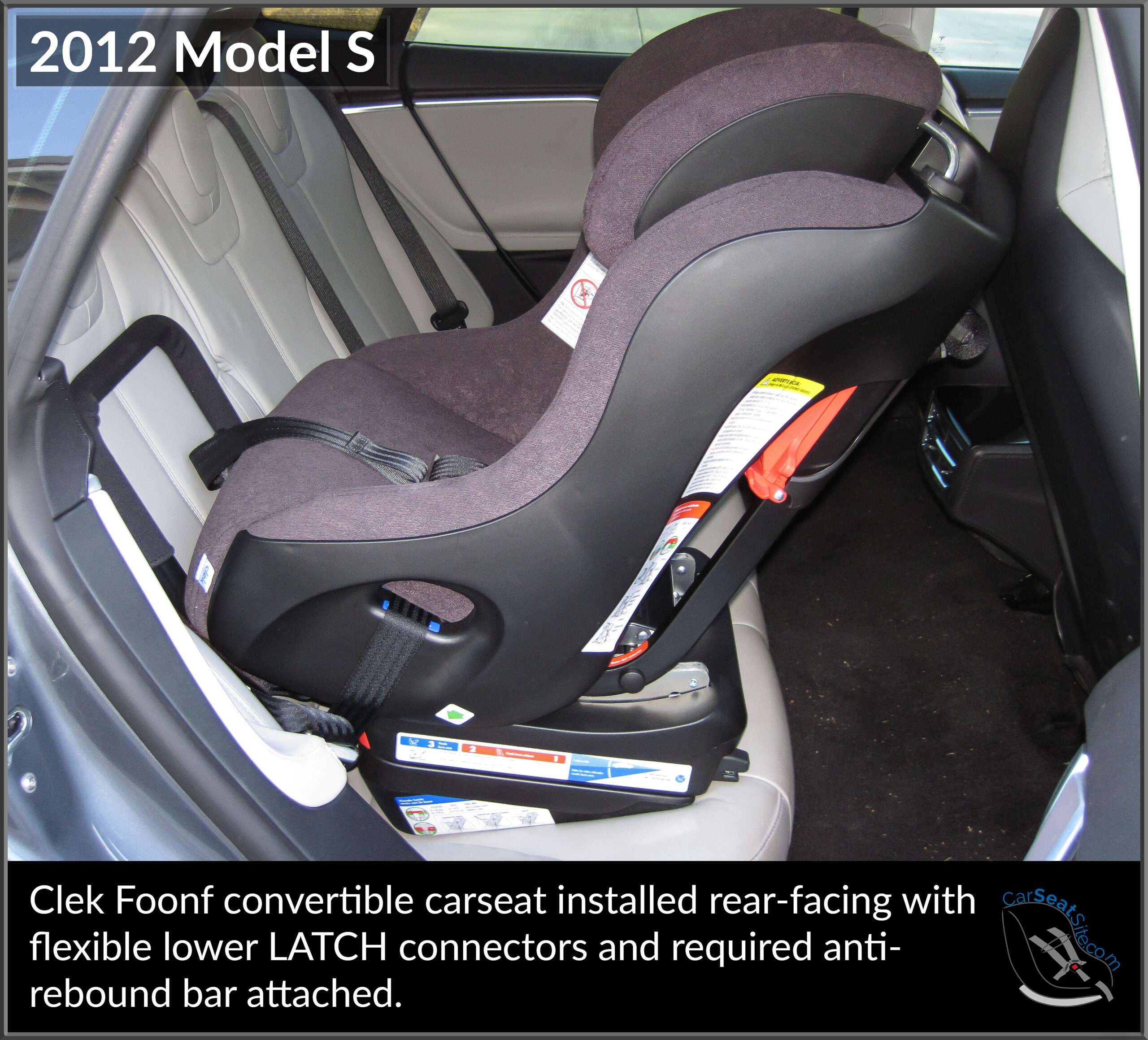
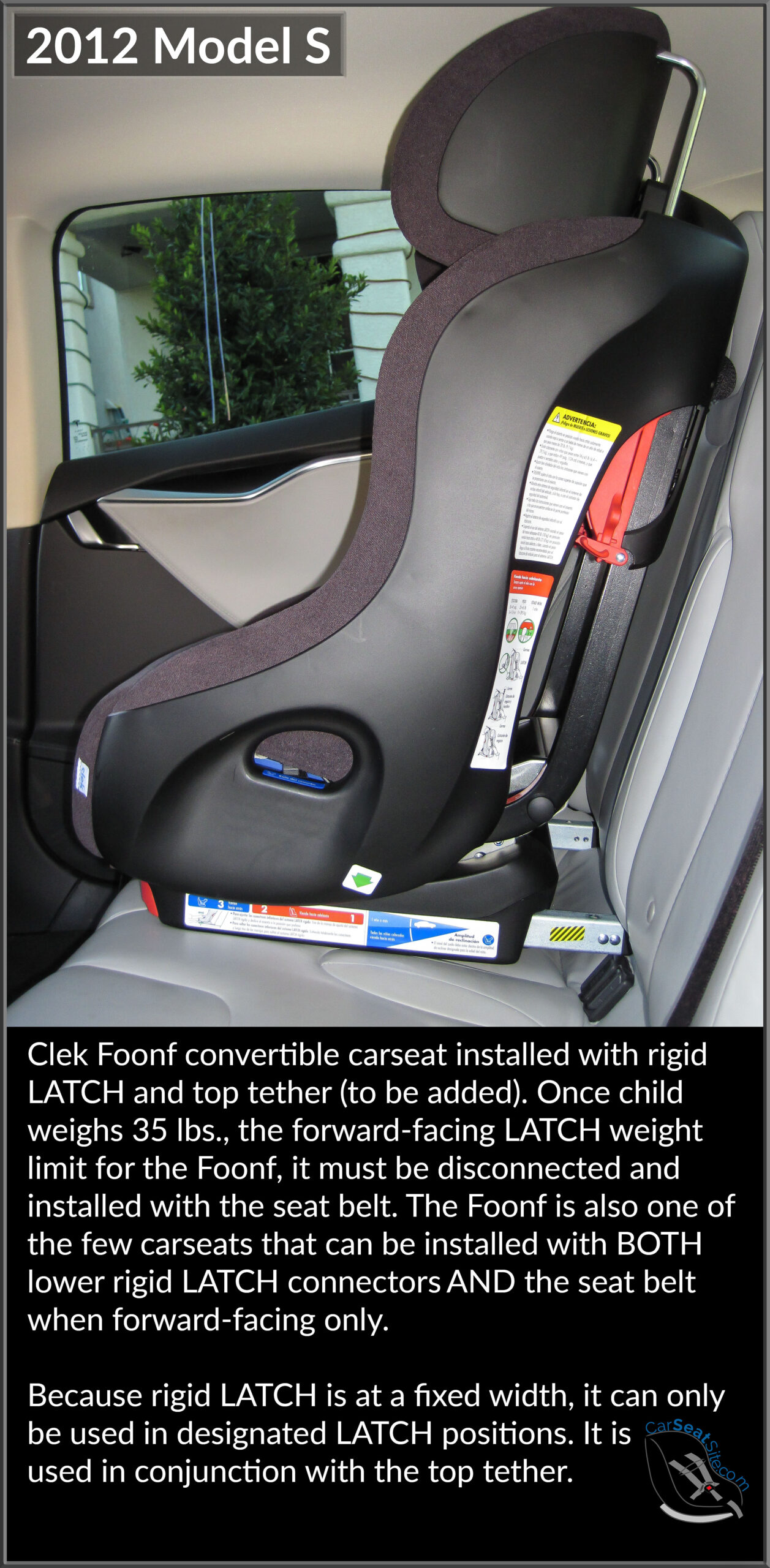
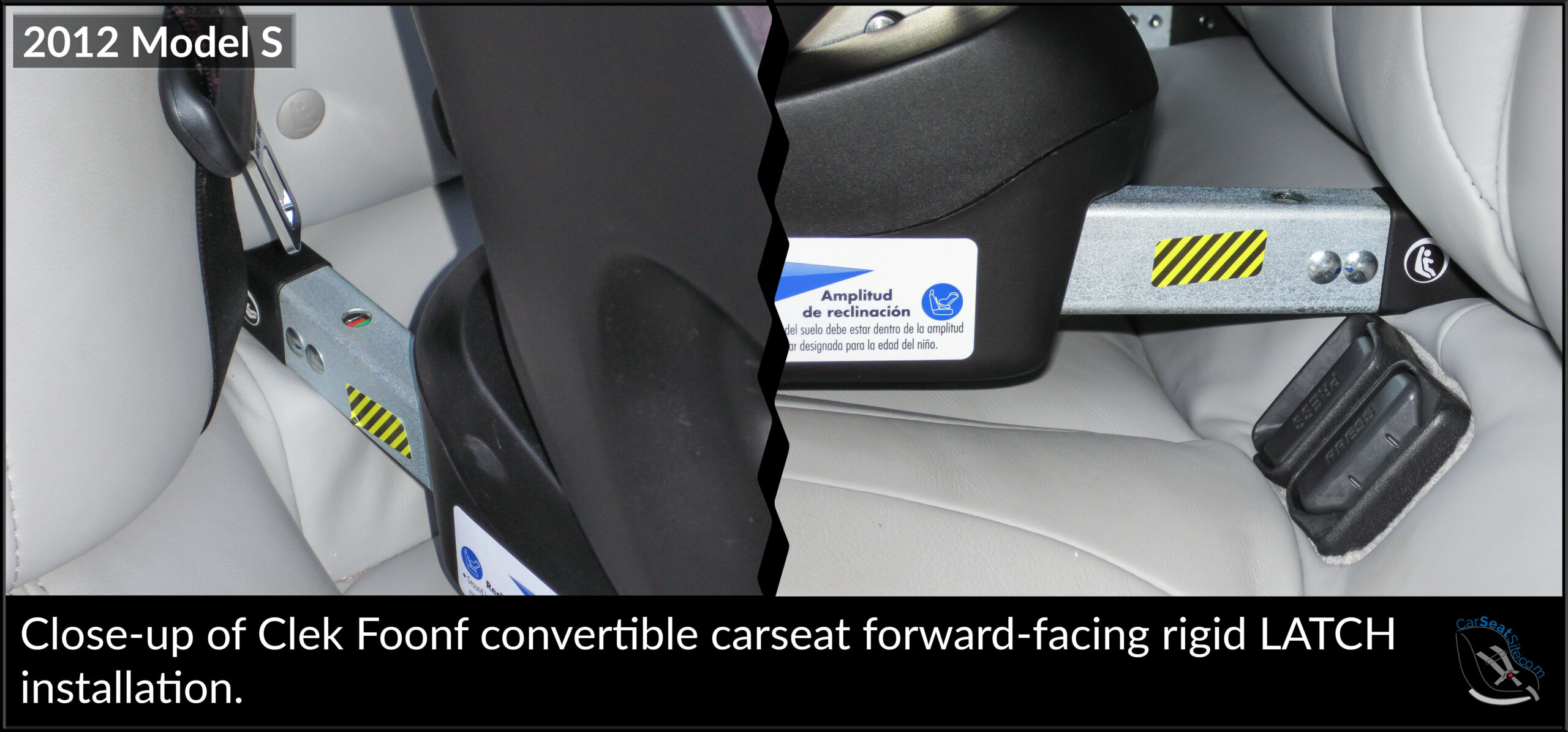
You may install a carseat in the Model S using either LATCH connectors or the seat belt, but not both at the same time (there are exceptions, so be sure to read your carseat manual and vehicle manual, which is occasionally updated). The LATCH connectors are on the carseat and the anchors are in the vehicle’s seat bight.
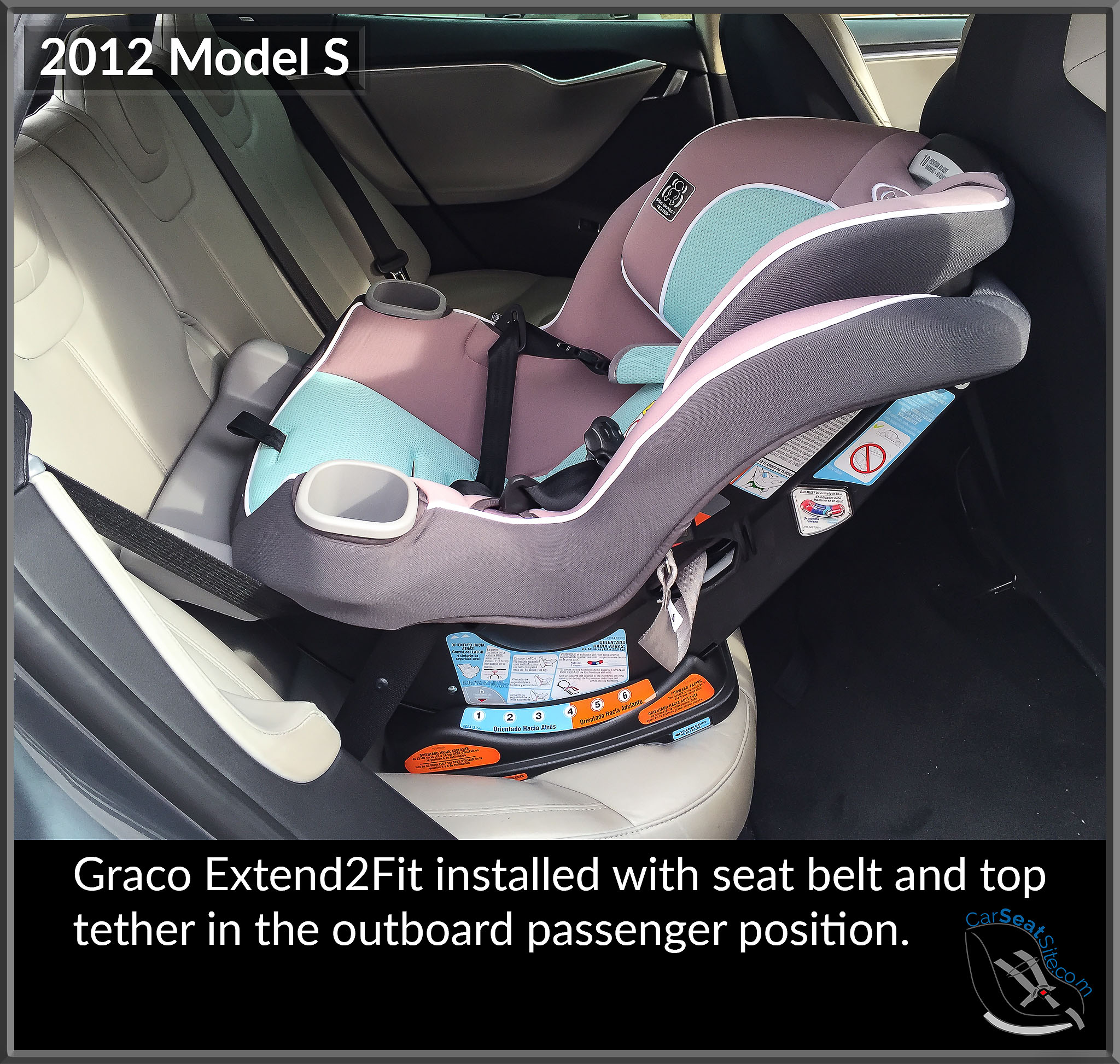
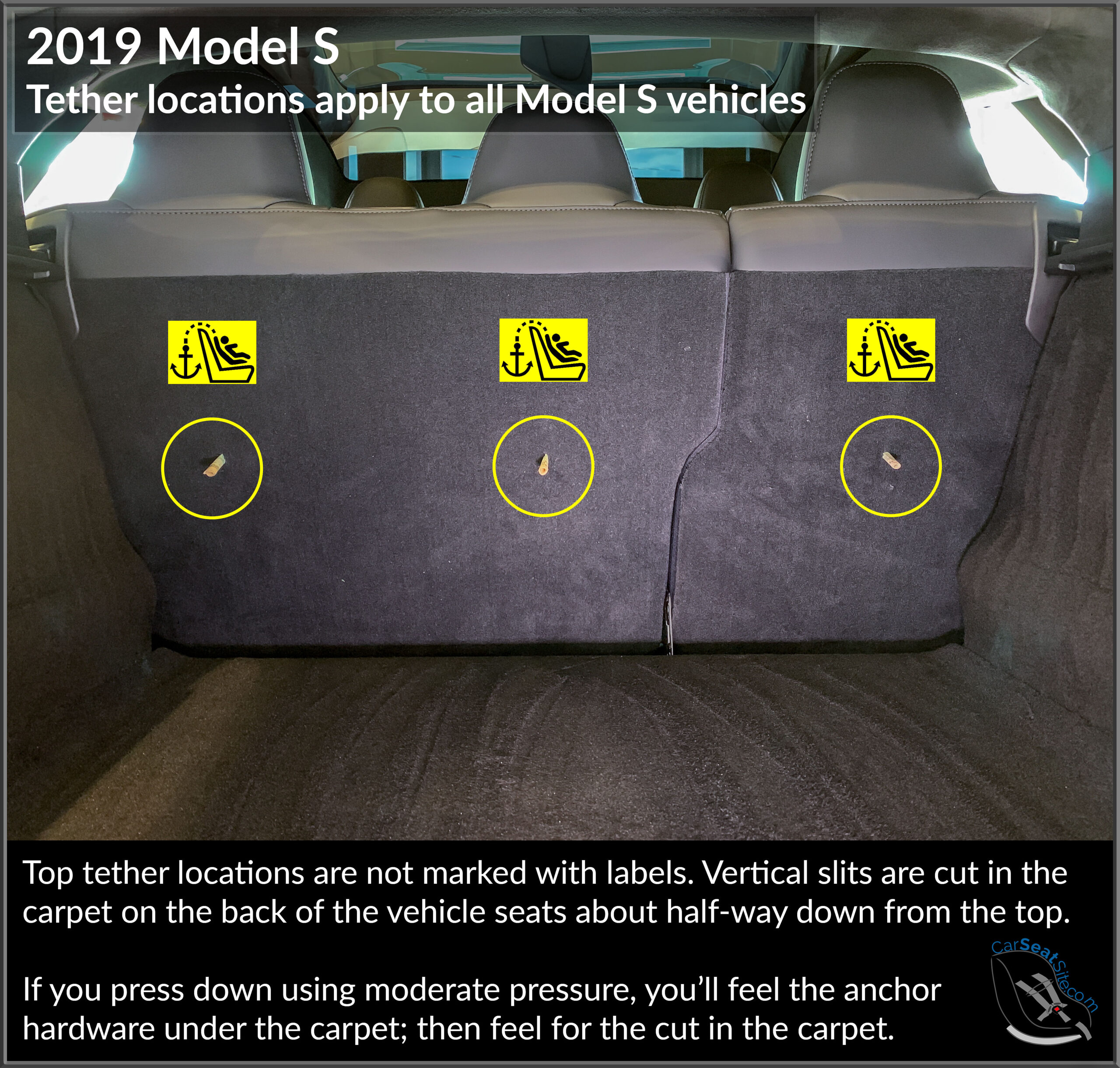
The top tether is used with ALL forward-facing installations, LATCH or seat belt, and some rear-facing carseats use it in a technique known as Australian-style tethering. The top tether location has not changed through updates in vehicle seats. Lower LATCH anchor installations are limited by the child’s weight; check the labels on your carseat or your carseat’s LATCH installation section for weight limits.
All Model S Model Years:
For carseat installations, there are 2 dedicated lower LATCH locations in the outboard seating positions in the back seat and 3 top tether locations for all seating positions. Cars with Gen 1 seats (see below) have center LATCH. If your Model S doesn’t have center lower LATCH anchors, use the seat belt to install your carseat in the center seating position.
LATCH locations are based on model year (MY). All vehicles have lower LATCH anchors in the outboard positions.
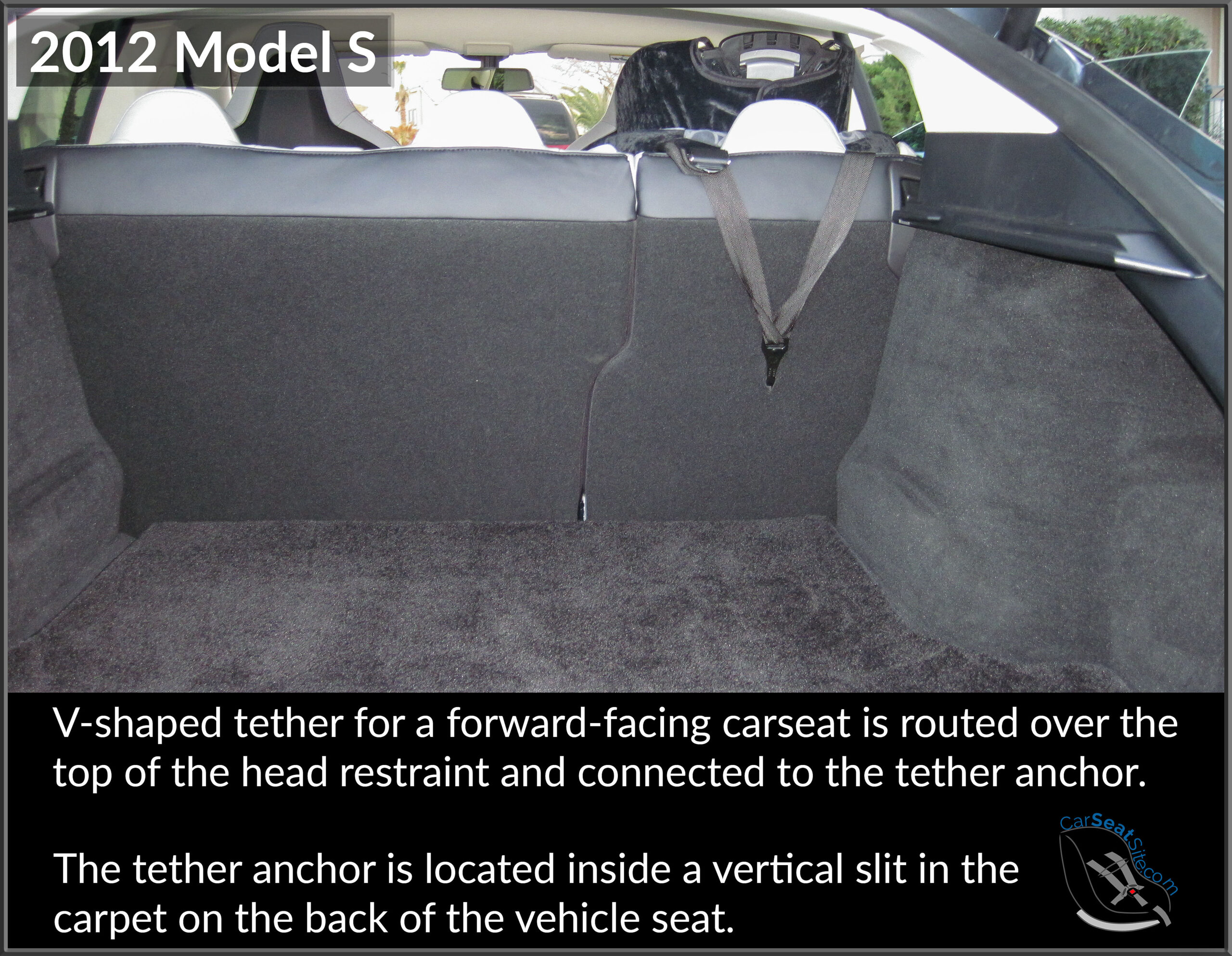
2012-2014 (through Q4; AKA Gen 1 Seats):
The original Model S vehicle seat design was very carseat- friendly as the seats were relatively flat and the head restraints were little more than nubs. Tesla updated the design in 2014, improving the head restraints for adult passengers and kids riding in backless boosters.
The back seats are flat with bolsters on the outside at each door that can push a carseat toward the center. The head restraints are small and flat. Lower LATCH anchors are in outboard positions, with one (1) LATCH anchor in the middle that, when combined with an outboard anchor, creates a center LATCH position (phased out during late MY ’14, so some vehicles may not have it; I was not able to find any MY ’14 pictures with a center LATCH anchor, so I believe it is uncommon).
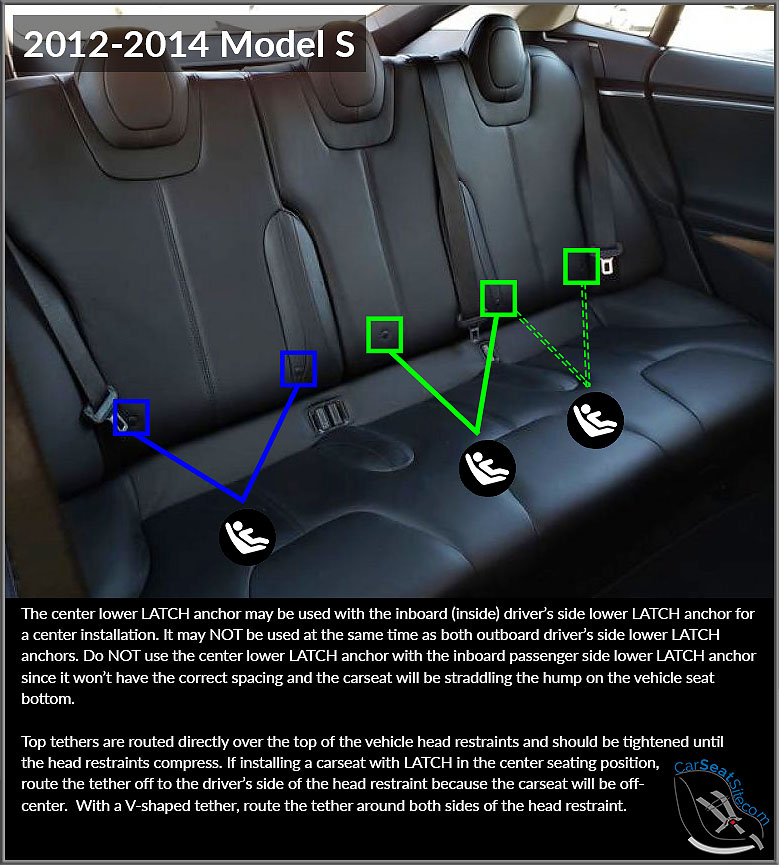
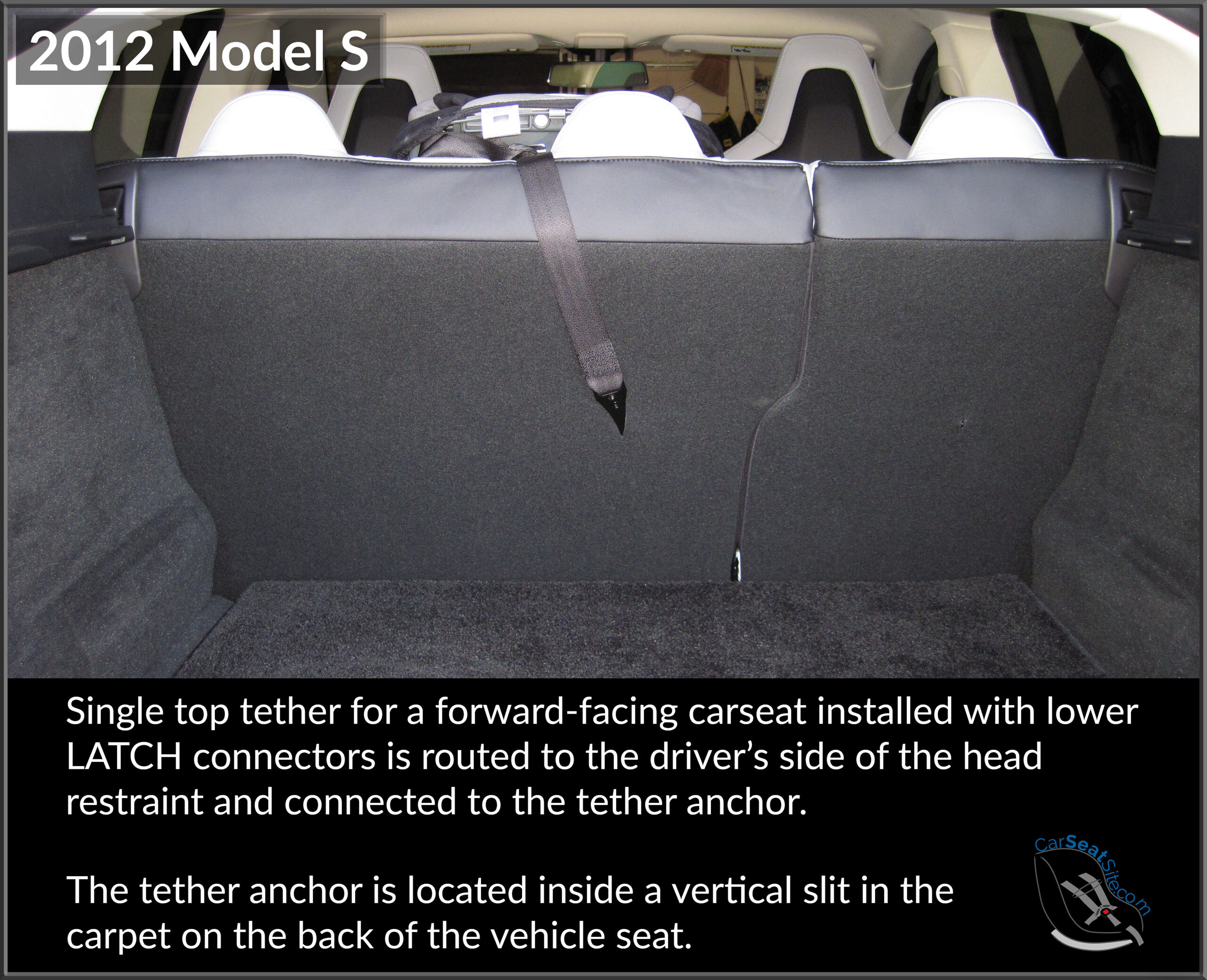
When using a tether for a forward-facing carseat, the tether is routed over the top of the head restraint. If the tether is V-shaped (Britax), the tether straps go around the head restraint.
Very tall carseats and boosters installed in outboard positions may not be able to have headwings extended to their full height because of the slope of the vehicle roof.
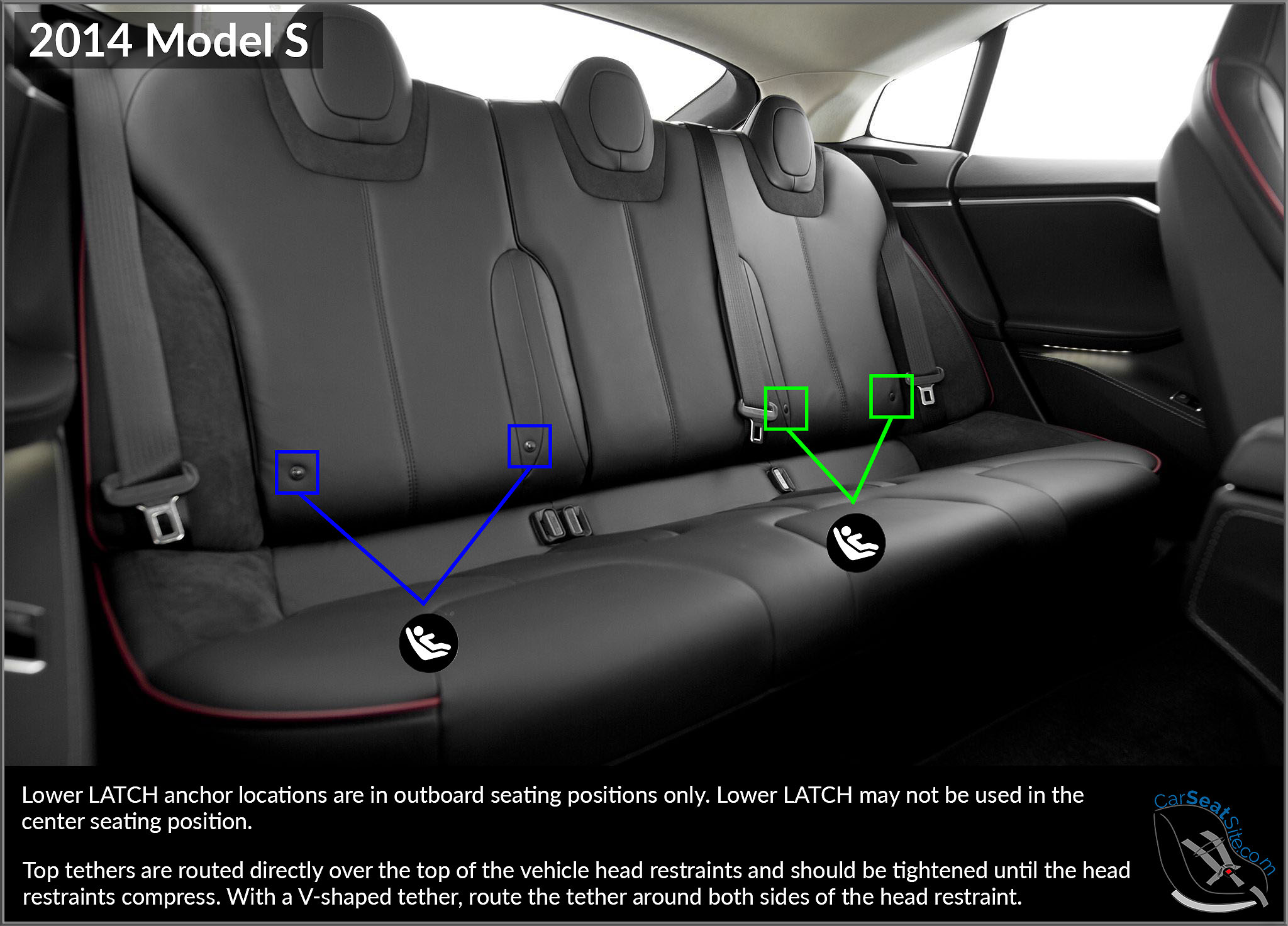
2014-2015 (Gen 2 Seats):
The back seats are still relatively flat but have a little more contour to them and the head restraints are taller and angled forward. Because the head restraints are angled forward, taller carseats or seats with adjustable headwings will have problems with installation.
When using a tether for a forward-facing carseat, the tether is routed over the top of the head restraint. If the tether is V-shaped (Britax), the tether straps go around the head restraint.
Very tall carseats and boosters installed in outboard positions may not be able to have headwings extended to their full height because of the slope of the vehicle roof.
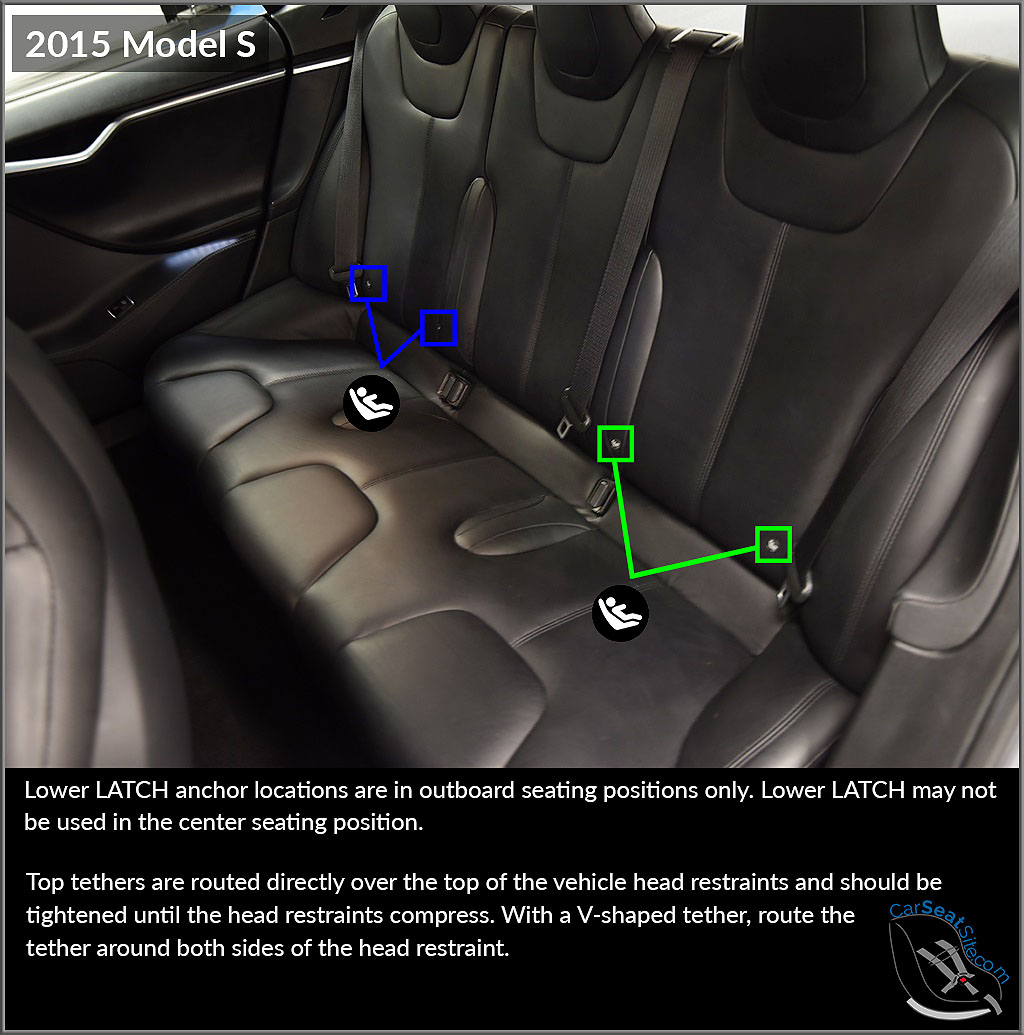
2015-2016 (Gen 3 Seats or Next Gen Seats):
The back seats have more contour to them than before and the head restraints are flat.
When using a tether for a forward-facing carseat, the tether is routed over the top of the head restraint. If the tether is V-shaped (Britax), the tether straps go around the head restraint.
Very tall carseats and boosters installed in outboard positions may not be able to have headwings extended to their full height because of the slope of the vehicle roof.
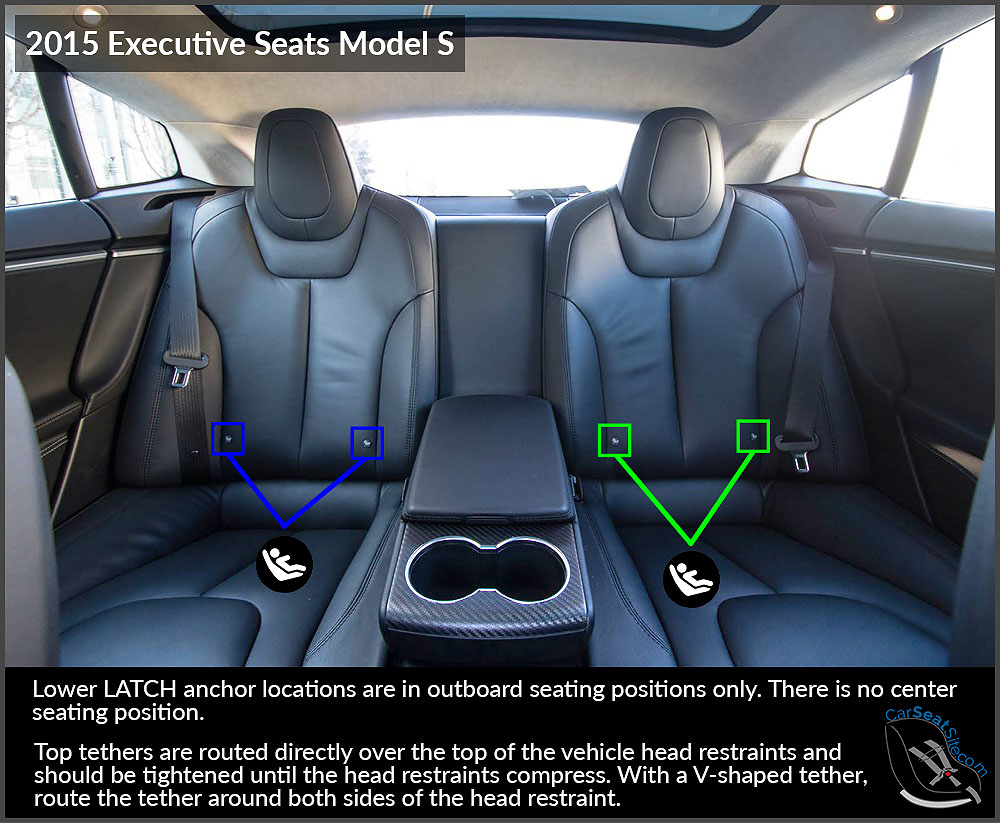
A much less common type of back seat design is the Executive Seat, which has a permanent center console making the Model S a 4-seat vehicle. Designed for the Chinese market where chauffeurs are common, these seats still have the FMVSS 225-required 2 sets of LATCH.
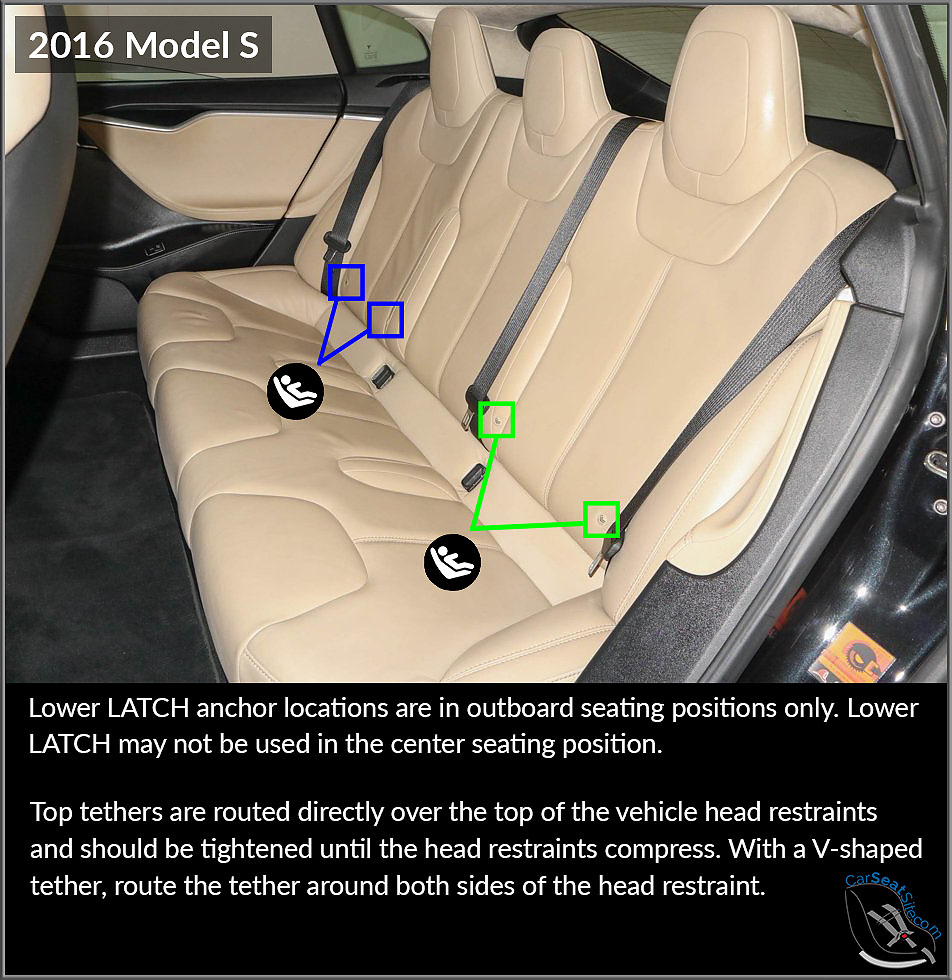
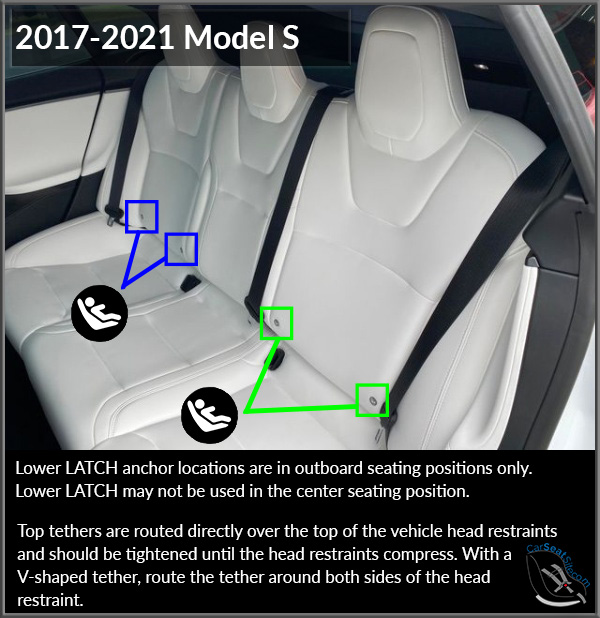
2017-2021 (Gen 4 or Tesla Premium Seats):
Beginning in July, 2017, Tesla updated the rear seat so that the center seating position is raised; it’s more like there are 3 separate seating positions. Lower LATCH anchors are in outboard positions only, top tethers are in all 3 seating positions.
When using a tether for a forward-facing carseat, the tether is routed over the top of the head restraint. If the tether is V-shaped (Britax), the tether straps go around the head restraint.
Very tall carseats and boosters installed in outboard positions may not be able to have headwings extended to their full height because of the slope of the vehicle roof.
Black Tesla has an excellent video detailing the early history of Model S vehicle seats. If you’re interested in viewing it, please click here.
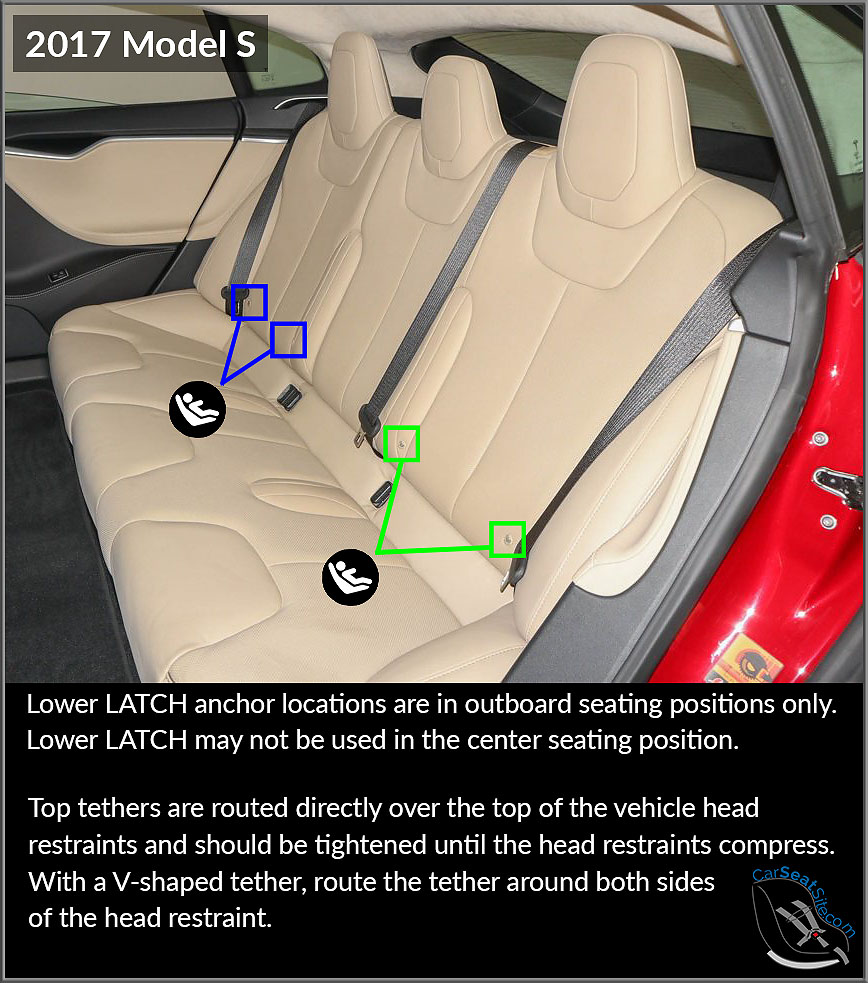
2021-Current:
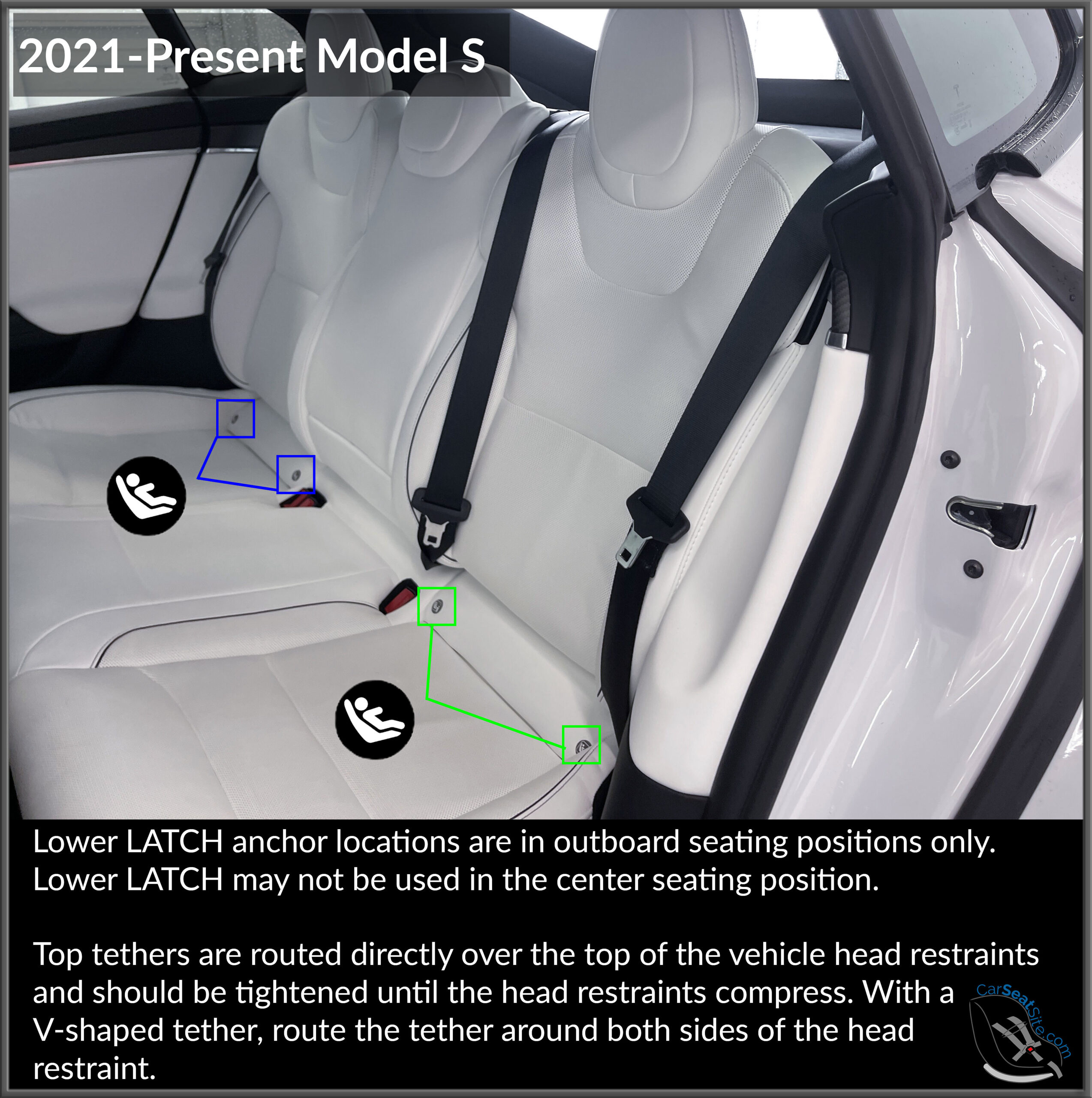
Not much has changed in the overall design of the shape of the Model S back seat since 2017; however, the most noticeable is that the release of the Plaid version prompted a change in the center seating position head restraint. It’s about half-size now, which will factor in for taller kids using a backless booster. Make sure their ears don’t go over the top so they have whiplash protection.
Lower LATCH anchor locations differ slightly as well. On all iterations of the Model S, except Plaid, through 2021, lower LATCH anchors are higher in the vehicle seat bight (crack). Beginning with the Plaid version and starting in 2022, lower anchors are lower in the bight and you must lift a flap to reveal them.
Model S Tether Pics
For best viewing and pic descriptions, please click on the gallery:
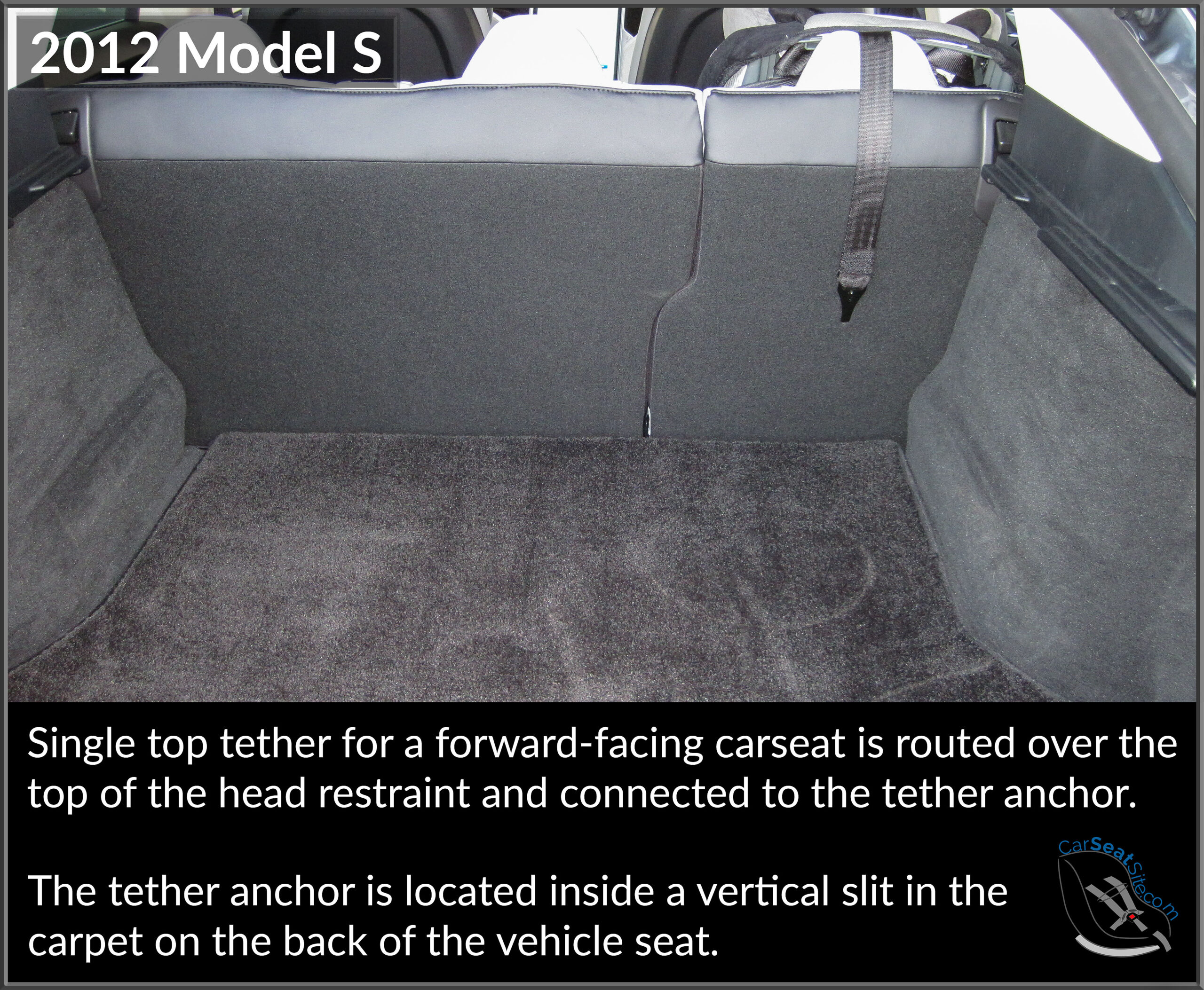
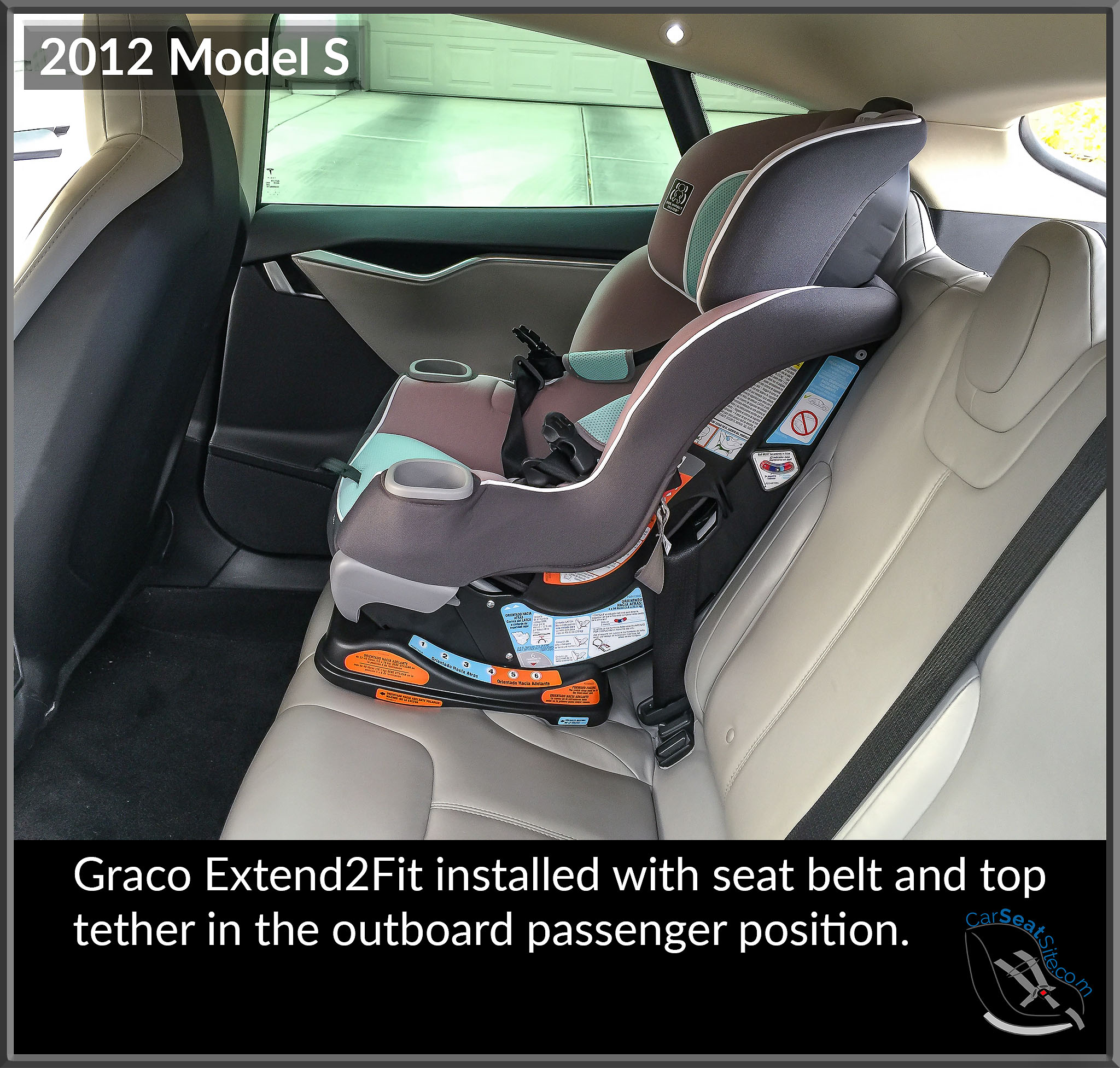
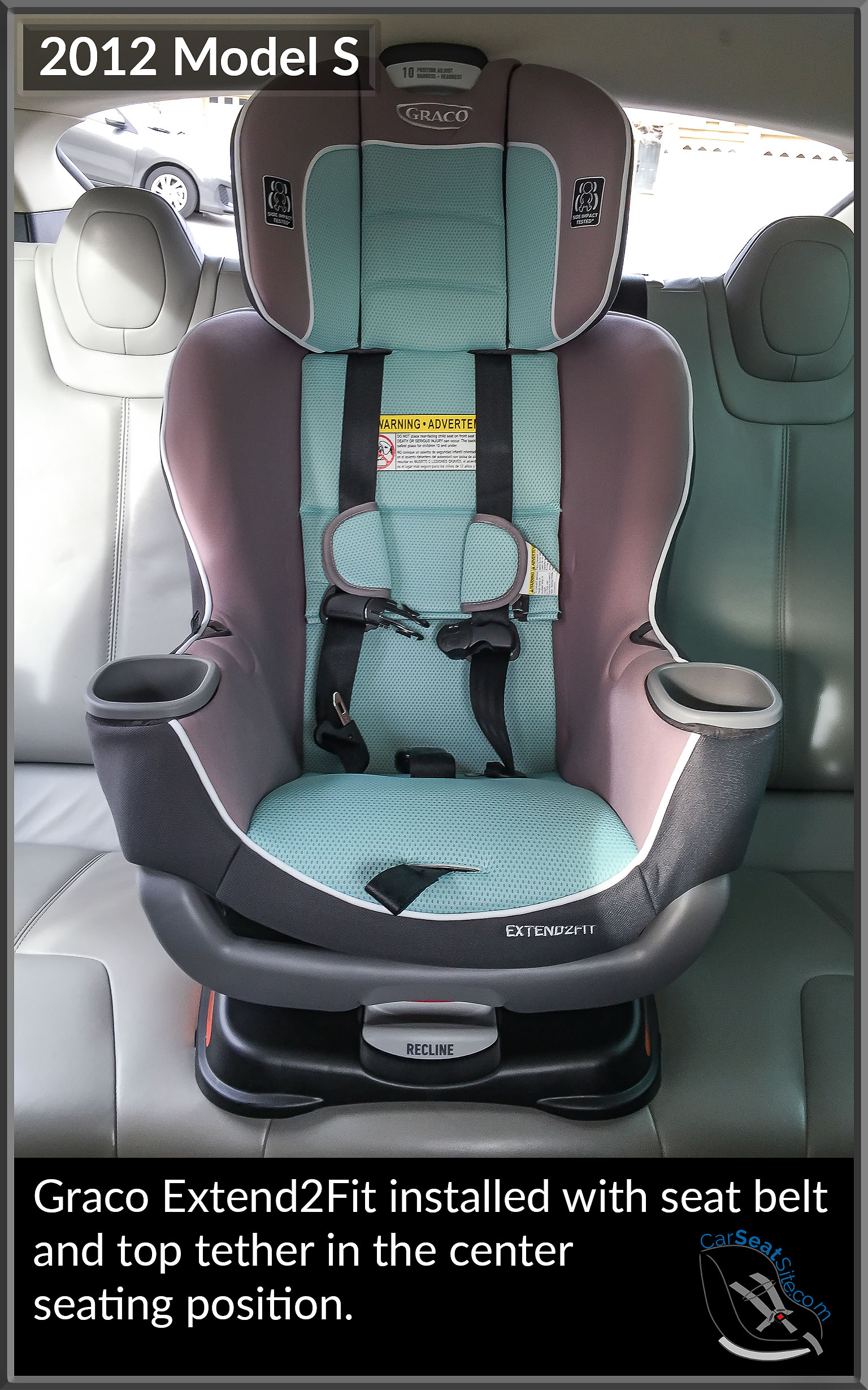
Model S Carseat Pics
For best viewing and pic descriptions, please click on the gallery: