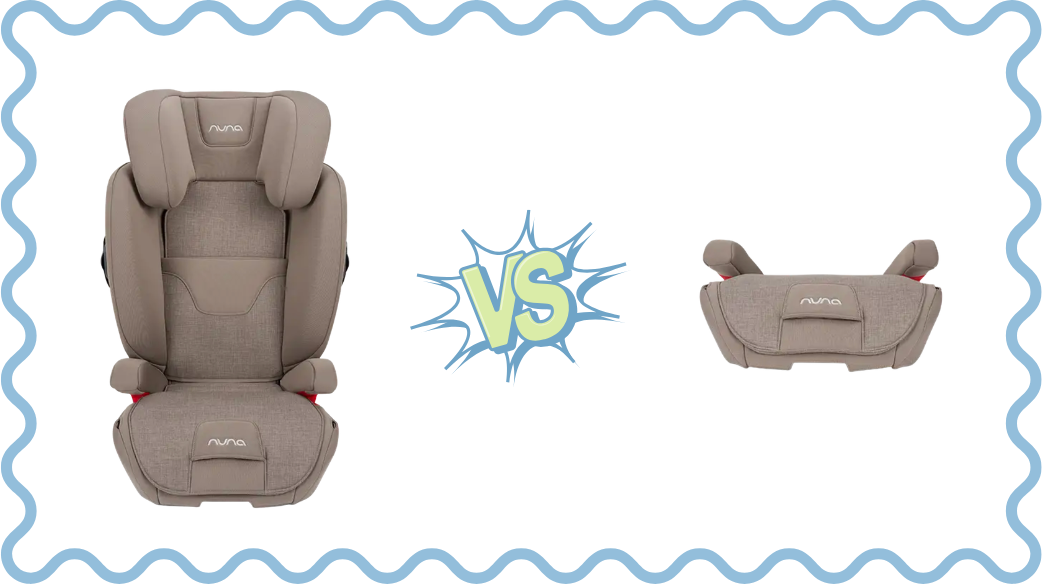
Is There a Safety Difference Between a Highback Booster Seat and a Backless?
Belt-positioning booster seats are the last step in child restraints before kids move to using seat belts alone. They’re probably the least understood because caregivers assume they’re easy to use since they don’t install like harnessed car seats, even though proper use depends largely on the child buckling correctly.
The express purpose of a belt-positioning booster is to lift a child up so that they fit properly in an adult seat belt. Seat belts are designed to fit an average-sized man. Without a booster, the lap belt will sit too high on the child’s belly, potentially causing internal injuries to organs (even spinal injuries depending on the severity of the crash). A child may be irritated with the placement of the shoulder belt on their neck and put it behind their back or under their arm, which creates a host of problems in a crash. Together, these injuries are called “Seat Belt Syndrome.”
Kids should be in boosters until they fit in seat belts like adults, which means they need to be adult-sized. When children enter puberty, their bodies mature not only in height and weight, but also their hips change shape which help hold the lap belt down.
Which style of booster should you choose? As with harnessed carseats, there are a wide variety of choices, from highback to backless, those with LATCH attachments, and even boosters without arms. How do you know which one is the safest choice? Is more expensive better or can a $40 booster do the same thing a $400 booster can?
Highback Boosters vs. Backless Boosters?
 Highback boosters resemble harnessed carseats in that most are pretty enveloping and feel secure around the child. They are a good transition model from a harnessed carseat because of those encompassing sides: the child doesn’t feel like they have as much freedom to move around as they would in a backless booster. The sides help support tired kids who sleep and keep them aligned with the seat belt.
Most highback boosters grow with the child. As the child gets taller, the back can be raised so the shoulder belt guide is still above the shoulder. Some have adjustable torso wings too. One of the biggest highback booster misuses I see is the child crammed into a highback because the caregiver didn’t realize the headrest could be raised.
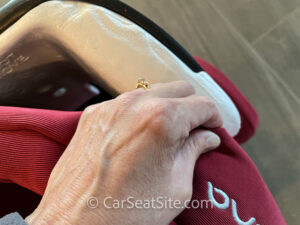 Most highback boosters also have some kind of energy absorbing foam (EPP/EPS) in the headwings. While there isn’t any data suggesting this is safer in side impacts (I was able to find one paper from Korea that found a highback booster in conjunction with side airbags and other vehicle safety features reduce injury criteria), we generally go with the assumption that energy absorbing foam adds to safety, as it does with bicycle helmets. The more important aspect of booster use is that it adjusts the seat belt to proper positioning while increasing the height of the child to take advantage of the vehicle’s side airbags.
An early study, reaffirmed in 2025 by the American Academy of Pediatrics, showed that there wasn’t a difference in safety in side impacts between highback boosters and backless boosters. In frontal impacts, a child is presumed to be positioned in the same manner in both highback and backless boosters, so there won’t be a meaningful difference in injury statistics (highback boosters add bulk behind a child, so there will be added excursion numbers).
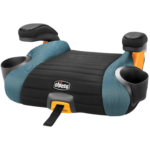 Backless boosters are basic boosters that are highly portable and generally not seen from outside the vehicle. They tend to do an excellent job of seat belt placement, but because there’s no side structure, they’re better for older kids who sleep less in the vehicle or have outgrown the highback portion of a highback booster. And again, they position the child to take advantage of the vehicle’s side airbags.
Are Premium Highback Boosters Worth the Extra Cost?
Just like harnessed carseats, boosters come in all price ranges. The higher the price, the more feature-rich the booster tends to be but that doesn’t guarantee it will fit your vehicle or your child.
A basic, no-frills highback booster, such as the Cosco Kids Pronto Trend or the Evenflo GoTime LX typically doesn’t have energy absorbing foam in the headrest and has a basic cover. It’ll be the least comfortable booster, but since it’s doing the same job in positioning the seat belt as the most expensive booster seat, it’s considered to be just as safe as long as it’s used properly. These 2 boosters also convert to backless boosters when the child outgrows the backrest in height, though not every highback booster converts to a backless booster.
Lower-priced boosters such as these tend not to have features such as lower anchor connectors (LATCH) to secure them to the vehicle. Why might you want LATCH on your booster?
Using the lower anchor connectors to attach the booster to the vehicle’s anchors secures it in place and makes it stable while the child climbs in to buckle. It also keeps the booster in place when the child isn’t riding in it so it doesn’t become a projectile, though some manufacturers specify that it be buckled in even though it’s LATCHed in place.
A little higher on the price scale are highback boosters with lower anchor connectors (LATCH). These mid-range boosters have energy absorbing foam in the headrest, more padding in the cover (and covers that tend to stay on better), and lower anchor connectors.
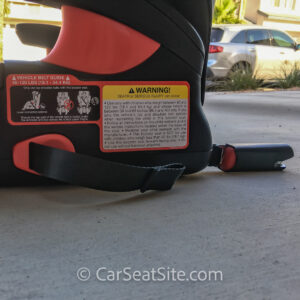
Highback boosters in this mid-price range include the ever-popular Graco TurboBooster LX, Chicco KidFit ClearTex, and Britax Skyline.
The most expensive highback boosters—over $250—have premium features that some parents find invaluable both in terms of ease of use and comfort for their child. Padding is luxe as are fabrics used, energy absorbing foam in the headrest is thicker, there may be unique comfort features such as lack of armrests to make buckling easier in a tight spot or reclining headrests, flame retardant free fashions, and the lower LATCH connectors in this price range tend to be rigid LATCH, which can be much easier to install, depending on your vehicle.
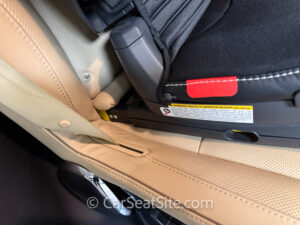
Some of these boosters do not convert to backless boosters, which makes their price unappealing for the sometimes-short time a highback booster is used; however, there’s a wide variety of boosters in all price ranges that fit in all vehicles.
Premium boosters with rigid LATCH include the Nuna AACE, Peg Flex 120, UPPAbaby Alta V2, and the Axkid Up.
What’s the Answer Then?
With decades old data telling us that there’s no difference in safety between highback and backless boosters and no new research released in the U.S. on the topic, we’re left with the question of is one style of booster safer than another? Manufacturers are putting side impact safety features on all their highback boosters, even though they aren’t required to given the updated standards set to go into effect at the end of 2026 (side impact rules affect seats up to 40 lbs.). Is there a solid, data-driven answer? I don’t think so.
At some point, children outgrow highback boosters by height: boosters are outgrown generally when shoulders reach the shoulder belt guide (each manufacturer sets their own limits) or the tops of the ears are above the top of the headrest. Your kids may also outgrow highback boosters by social insecurity (aka, peer pressure). If they don’t fit into the seat belt like an adult, they must continue using a backless booster for safety.